
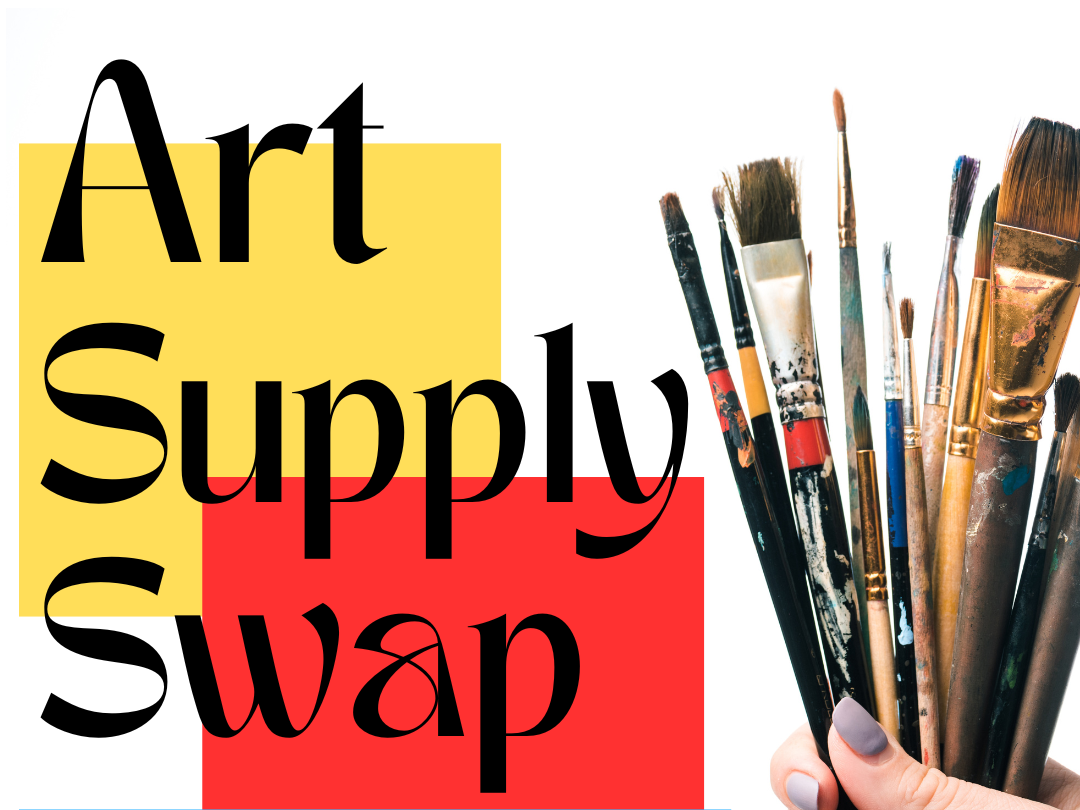
One way we can cut carbon emissions as individuals is to buy less, and reuse more. That’s why we started hosting regular a Art Supply Swap starting in 2024.
At quarterly events, we invite folks to bring all of the gently used art supplies collecting dust in their studios and swap them for other things. This allows unused art materials, which can be expensive, to be rehomed and put to good use. It also diverts these materials from heading to the landfill (especially important for oil paints and similar materials, which are considered hazardous waste).

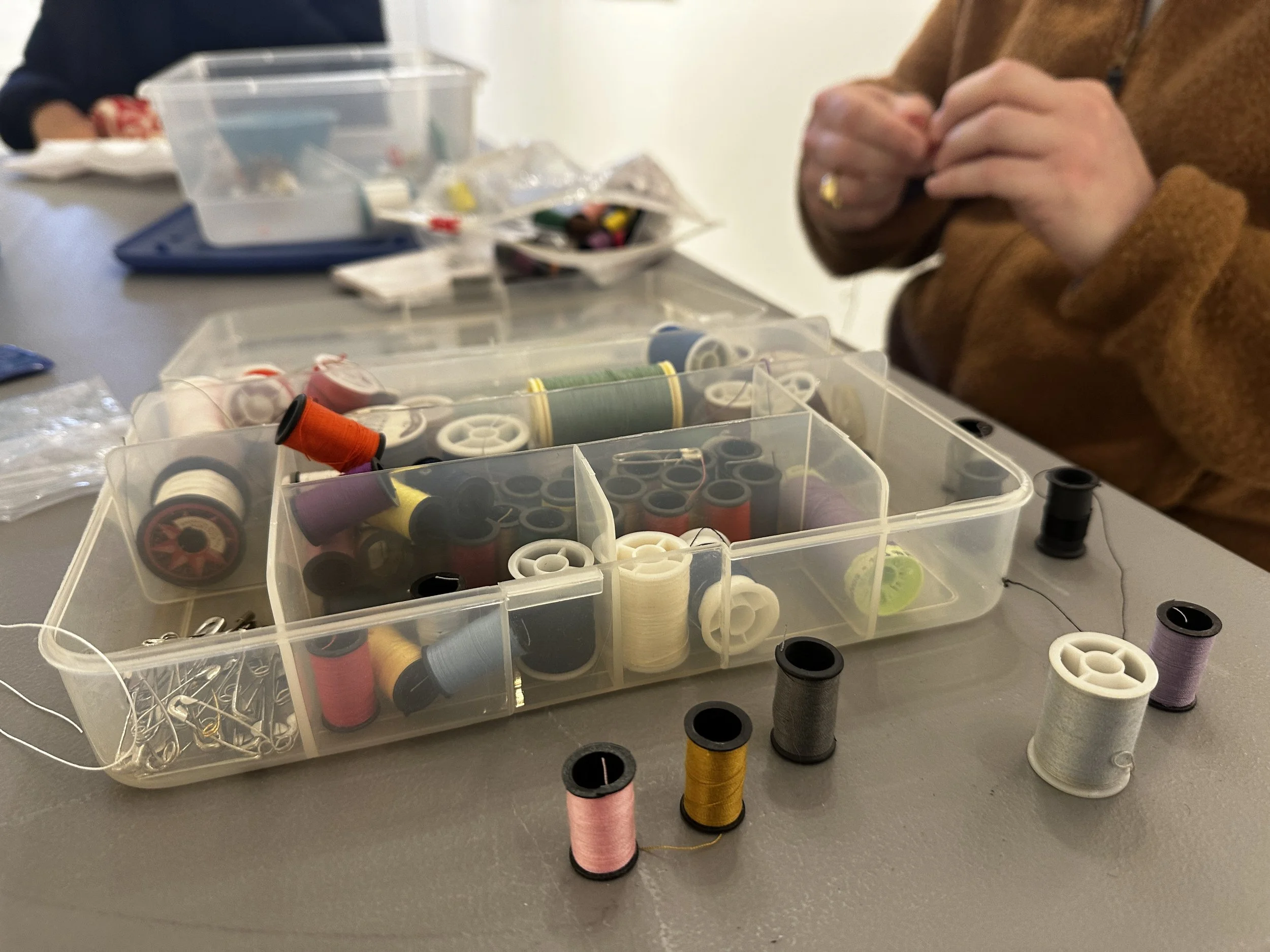
Aside from “Reduce, Reuse, Recycle”, we also believe in the power of “Repair”! The fast fashion industry has made cheap clothing with a high environmental and ethical pricetag quite common. Many people are under the impression that if a button falls off a shirt, it’s no long wearable. This could not be further from the truth!
At Mending Society events, we invite people to bring in garments that are in need of repair for a good old-fashioned stitch and bitch. We coach novice sewists through the mending process. These events always have a warm community feeling, and everyone leaves with a beloved garment that they can wear again! Win win win!
ShowUp Environmental Responsibility Statement
This is a living document, initially adopted 12/20/25
Introduction
As part of a community where power stems from working together, the creative sector has an opportunity to reduce environmental impact both individually and collectively.
We aim to take action in line with the principles of climate justice, recognising the connections between the climate crisis and other global injustices. We want our environmental actions to support - rather than undermine or ignore - the needs of people on the frontlines of marginalisation and injustice.
We have set out our logic, action and targets below with the knowledge that despite our imperfection, some action is better than none. We are still learning and have much progress to make. We welcome community feedback on this environmental statement, our targets, and on our action plan.
Why us?
The art world has an important role to play. Arts organizations – particularly in the Global North – have a disproportionately large impact on the environment, mainly due to international travel, arts shipping, and a high use of energy and materials for climate control and maintenance.
ShowUp is a Boston-based contemporary art gallery and education space focused on featuring underrepresented visions and voices. Focused on sustainability practices, ethics, and the power of representation, ShowUp works to nurture the careers of high-potential, talented curators and artists through thoughtful support, an innovative environment, and unique opportunities. We work to connect creatives and community amplifying artists and their voices, providing tools for self-sufficiency, and empowering artists and curators to experiment, learn, and have meaningful exchanges. To fulfill this mission, we need to take urgent environmental action, because the climate crisis affects artists all over the world, and those from marginalized communities and cultures are most at risk.
Overarching Goal: reduce environmental impact, inspire others
As an organization, we know that some of our direct environmental impacts include travel, land and air freight of artworks, energy use in our exhibition space, and choices we make in how we install and display our exhibitions.
We want to use our public platform to set a positive example with our actions, and influence others to see that taking on the challenge of reducing waste and energy use can have a positive impact: bringing galleries and like-minded artists, collectors and community closer together. We also hope they will join us in bringing climate action to the forefront of public debate.
ShowUp’s plan of action:
Joining the Gallery Climate Coalition, and pledging to at least halve our carbon emissions by 2030, from our measured 2024 baseline.
Calculating and publishing our yearly operations carbon footprint to track progress towards this target.
Actionable changes for reduction in emissions include:
Ensure 80% of our shipping is carried out by sea, rail or road rather than air by 2027.
Reduce our gallery’s energy use (defined by measurable electricity and gas utility use) by 30% between 2024 and 2030.
Ensure all packing and exhibition materials originating at the gallery are reusable or curbside recyclable by 2026; and all artist-originated packing materials are reusable or curbside recyclable by 2030.
The actions we are taking to meet these targets include:
Integrate extant documentation to measure success via questionnaires and rubrics
Create impact analysis documentation as related to specific actions and initiatives
Speaking to our shippers about alternatives to air freight. Extending planning time to avoid tight deadlines requiring air freight. Planning our exhibitions and events with care to minimise the need for air freight.
Experimenting with alternative materials for mounting exhibitions, including reducing reliance on vinyl for wall text, plastic labels for prices or wall labels, foamcore for mounting images, and other uses of plastics and harmful materials
Carrying out a yearly energy audit of our gallery to find opportunities for energy reduction and use of renewable energy sources.
Speaking to our suppliers and service providers about their carbon footprint, and look for opportunities to encourage them to take action, or to switch to alternative suppliers
Working as an advocate in our creative community to encourage other galleries, artists, and institutions to influence and encourage them to take on incremental behavioral changes that will slowly move us towards being better stewards of the Earth.
Why this, why now?
While it may feel like we are past the point of no return when it comes to the environment, there is always time to show our love, care and respect for Mother Nature. Environmental disasters loss of life, limb and property, and devastating lives, families, properties, cultural heritage and economies.
What can I do as an artist, curator, collector, or gallery?
Don’t look away. Think about your daily, weekly and annual habits and consider places where you can make small changes that result in meaningful shifts in your carbon footprint. If you are part of an arts organization, consider joining the Gallery Climate Coalition and making a similar pledge.
For more information, visit the Gallery Climate Coalition.
Our Progress
Carbon Report 2024
Total Carbon Used: 8.75 tCO₂e
Carbon Report 2025
Total Carbon Used: 6.25 tCO₂e