
Space Is the Place - the Legacy of Napoleon Jones-Henderson
By Maithili Rajput and Christine O’Donnell
Napoleon Jones-Henderson believed that art could not be separated from who made it, where it was located, or the community it served.
That belief shaped a life spent making, teaching, researching, and preserving Black artistic legacy.
The death of Napoleon Jones-Henderson (1943, Chicago, Il - 2025, Boston, MA) marks a significant loss for Boston’s rich visual art scene and for the broader histories of Black art in the United States. An artist, educator, and cultural steward, Jones-Henderson worked across disciplines and institutions, guided by a deep commitment to collective memory and artistic continuity.
Born in 1943 in Chicago, Jones-Henderson came of age during a pivotal moment in Black cultural production. His unflagging optimism, kind smile, insight, talent, energy and depth of knowledge blessed the wide scope of his spheres of influences.
As one of the most active members of AfriCOBRA (African Commune of Bad Relevant Artists), started in the late 1960s out of Chicago, Jones-Henderson’s work, both individually and as part of the collective, was dedicated to creating a bold, socially engaged visual language that celebrated community and culture.
AfriCOBRA’s impact on American art history is starting to be more and more appreciated, and Jones-Henderson’s role as one of its enduring members shaped a relationship with art as both practice and responsibility. Jones-Henderson's place in the canon of art history has yet to be fully articulated, but even within his lifetime, his influence on Boston’s creative community has created a lasting legacy.
After relocating to Boston in the 1970s to teach at MassArt, Jones-Henderson became a central figure in not only the schools’ community, but also in his Boston neighborhood, Roxbury, and within the city’s burgeoning art scene.
Teaching, for Jones-Henderson, was never separate from making. A lifelong student and educator, his mentorship has guided cultural leaders and artists. Education functioned as a reciprocal process, grounded in curiosity, rigor, and sustained engagement with material, history, and place.
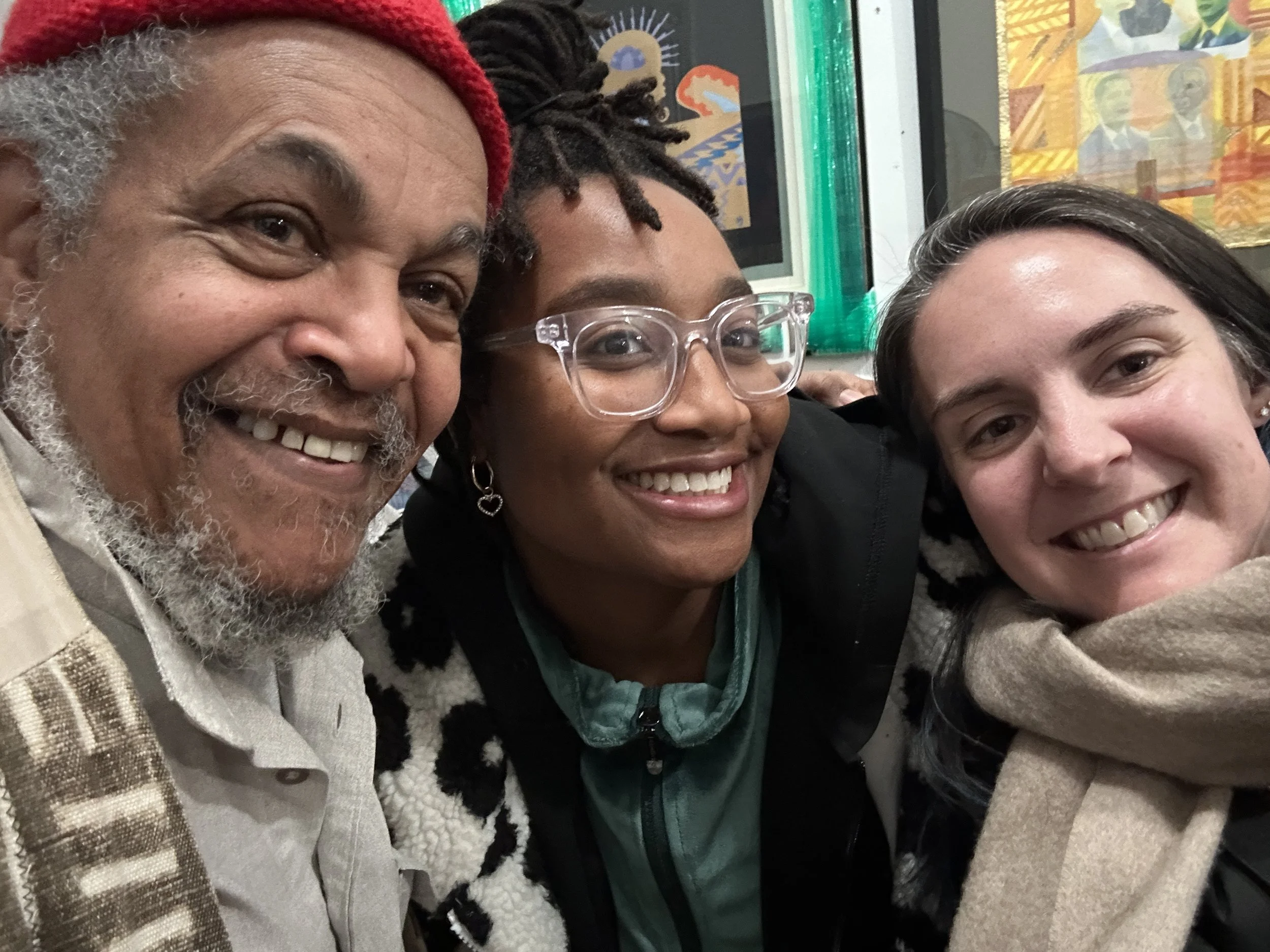
Photo credit: ShowUp, featuring Napoleon Jones-Henderson, Naomi Chambers, Christine O'Donnell
Jones-Henderson was introduced to ShowUp by staff curator Chenoa Baker, who had previously worked to curate with Jones-Henderson and others the Touching Roots: Black Ancestral Legacies in the Americas at the Museum of Fine Arts, Boston. ShowUp’s founder, Christine O’Donnell first visit to Jones-Henderson with artist Naomi Chambers launched a thriving relationship thanks to the artist’s generosity of time and spirit. He facilitated research visits, mentored emerging scholars, and joined ShowUp’s board: adding the organization to his ongoing support of Boston’s art scene.
Jones-Henderson’s creativity shone through during every conversation he had with O’Donnell:
“I recall during one of our final conversations that Napoleon was telling me about a series of prints he was putting together. I loved seeing how excited he was about it! And we discussed at length a shared passion: the idea of an art trail for Boston, and decided to collaborate where we could. ShowUp would do the behind the scenes legwork/labor to bring his ideas to life. I would have loved to have worked closely with Napoleon. He was both an inspiration and an icon.”
The personal project of Jones-Henderson’s shared for possible collaboration was his vision of a Roxbury Public Art Trail: a project that would map public artworks. Anchored near his historic home, the trail would highlight sculptures, murals, and community-driven projects. Within that network would then exist the ability to ensure better lighting and conservation as well as create opportunities for learning and for tourism in the neighborhood, driving a whole new cycle of learning and growth.
Just like the artist himself, this article, and his projects, there is so much more vibrancy and depth than we could possibly capture here. The official obituary for Napoleon Jones-Henderson gives more details in the life of this exceptional individual, a man whose spirit shone brightly, lighting a path for so many creative spirits in Boston. His presence will be acutely missed, and his legacy will live on through all of us he touched.
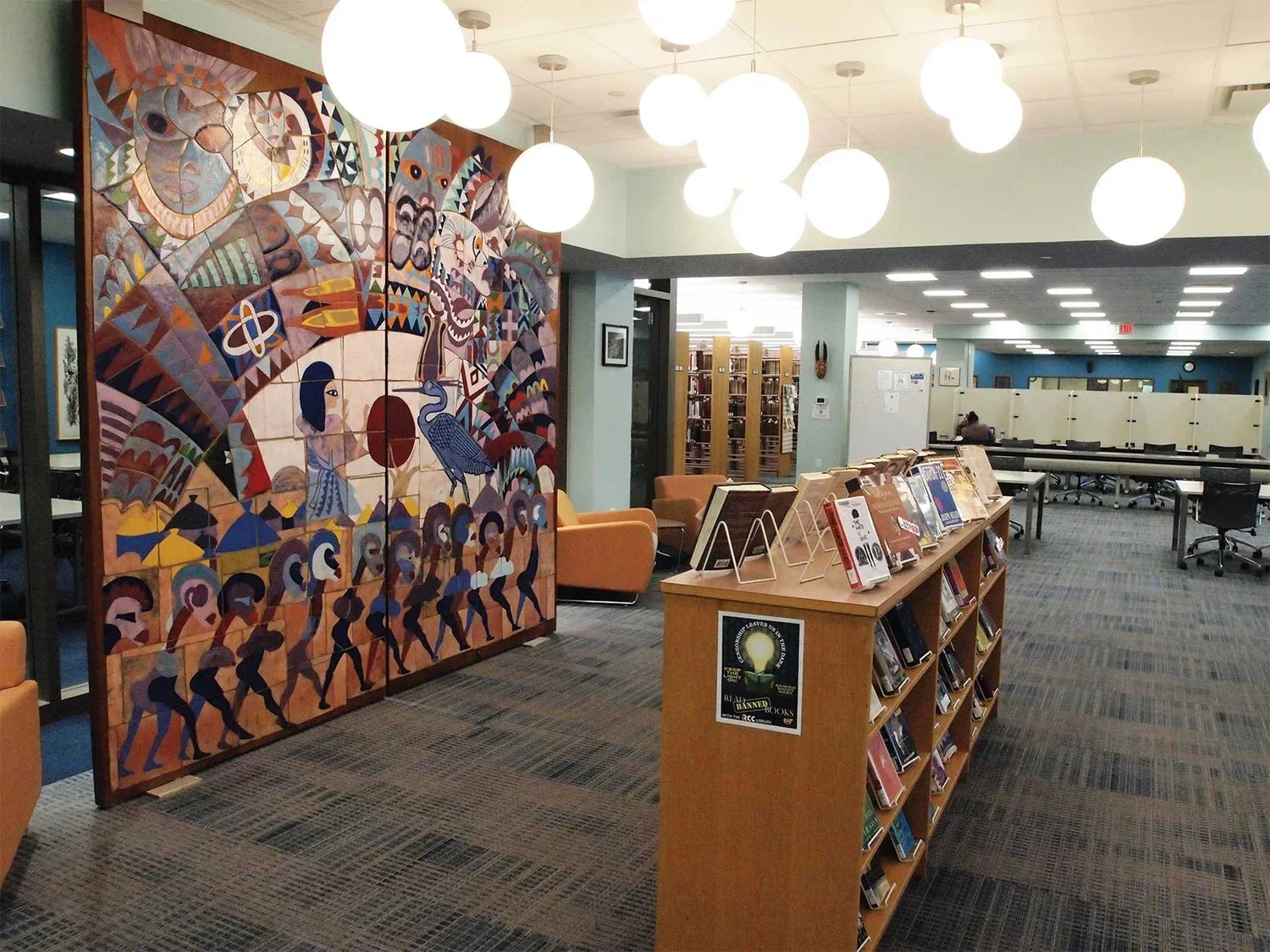
Napoleon Jones-Henderson, Nyame Birbi Wo Soro (1987), Enamel on Copper on Mahogany, 10' x 10' x 3". Roxbury Community College Library, 1400 Tremont St, Boston, MA 02120. Photo credit: Napoleon Jones-Henderson
Jones-Henderson was devoted to advocating for public artworks by artists across Boston, particularly in Roxbury and surrounding neighborhoods. His public art pieces can be found throughout the city. If you’d like to get involved in his Art Trail project, reach out to us.